A Castle Built on a Volcano
You see it long before you reach it. On a clear day the dark cone of Grodziec hill stands out above the fields of the Kaczawa Foothills, and on top of it sits a castle that looks exactly the way a castle should. Walls, towers, a gatehouse, a courtyard. It can be seen from Legnica, thirty kilometres away. What most visitors do not know is that the hill itself is an extinct volcano, and that the stones of the castle were once glowing rock.
Grodziec, known in German as the Gröditzburg, is one of the oldest and most dramatic castles in Silesia. Its story runs from Slavic tribes and Piast dukes through the Hussite wars and the Thirty Years' War to the German emperor, the Nazi era and the flames of 1945. Few places in the region pack so much history into a single hilltop.
Born from Fire
Millions of years ago this part of Silesia was a land of volcanoes. Lava pushed up through the earth, cooled into hard basalt and left behind a chain of lonely cones that still shape the landscape today. Grodziec hill rises to about 389 metres. Together with Ostrzyca and Wilcza Góra it is a landmark of the Land of Extinct Volcanoes, a geopark that stretches across the hills between Złotoryja, Jawor and Lwówek Śląski.
A steep, isolated hill with a view in every direction was a gift for anyone who needed to defend themselves. Long before the first stone castle, the Slavic Bobrzanie tribe built a wooden stronghold up here. The name Grodziec comes from "gród", the old Slavic word for a fortified settlement. The first written mention dates from 23 April 1155, when a papal bull of Pope Adrian IV listed the place among the possessions of the Church in Silesia.
The Piasts and the First Stone Walls
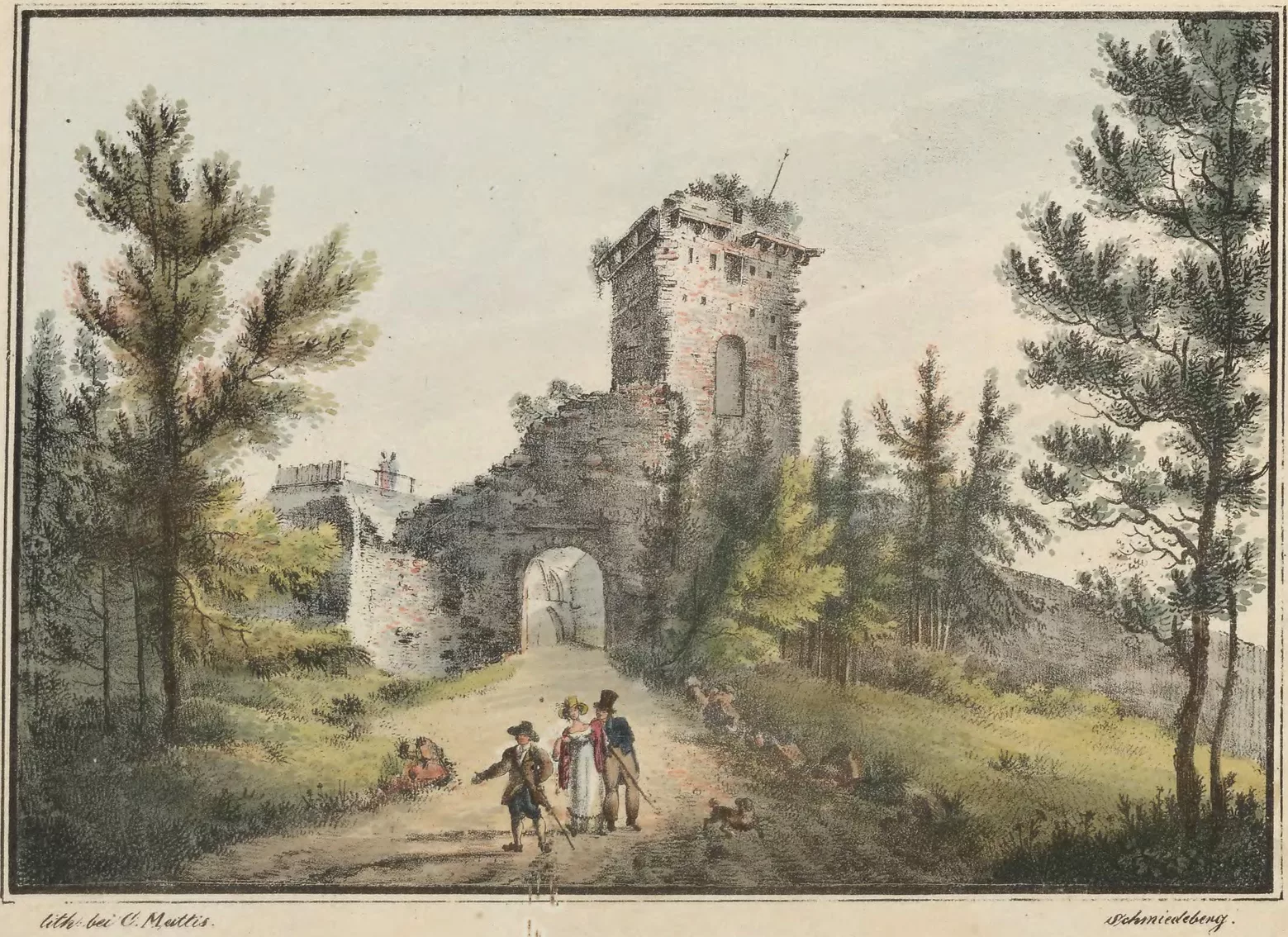
In the twelfth and thirteenth centuries Grodziec belonged to the Silesian Piasts, the dukes who ruled the region for generations. Under Henry the Bearded, who reigned from 1201 to 1238, the wooden fort was replaced by a castle of stone. Tradition says that his wife, Saint Hedwig of Silesia, founded the castle chapel. She remains one of the most loved figures in Silesian history.
From the fourteenth century the castle was held by the knightly Busewoy family. Then came the Hussite wars of the fifteenth century. Raiding armies from Bohemia swept through Silesia, and a Hussite detachment captured and plundered Grodziec. For a while the old stronghold was little more than a damaged shell on a hill.
Duke Friedrich and the Golden Age
The castle owes its present shape to the dukes of Legnica. In 1470 Duke Friedrich I bought it back and decided to turn it into something special. He brought master builders from Wrocław and Görlitz, the leading cities of the region. They gave the castle the layout that survives today, inspired by the ducal seat in Legnica.
His son Friedrich II carried on the work and made Grodziec one of the finest Gothic and Renaissance residences in Silesia. Friedrich II was a remarkable man. He took the Reformation to his duchy early and tried to found one of the first Protestant universities in Europe. The rebuilding of Grodziec was finished in time for his wedding to Princess Sophie of the House of Hohenzollern. The castle hosted a great feast, and a knights' tournament was held below the walls. Grodziec had become the duke's favourite residence and a place where Silesian politics was made.
Wallenstein and the Long Sleep
The golden age ended in the Thirty Years' War. When armies crossed Silesia, looting and burning towns and villages, the castle first became a refuge. People from the surrounding villages brought their families and their belongings up behind its walls. There were plans to turn Grodziec into a modern fortress, but there was never enough money to finish them.
Then the troops of Albrecht von Wallenstein arrived. Wallenstein was the most feared commander of the war, a man who financed his army by squeezing the land it passed through. His soldiers took Grodziec and set it on fire. The castle lost its military value for good. Over the next two centuries there were several attempts to rebuild it, but none were finished. By the eighteenth century the hilltop was crowned by a ruin.
The Romantics Discover the Ruin
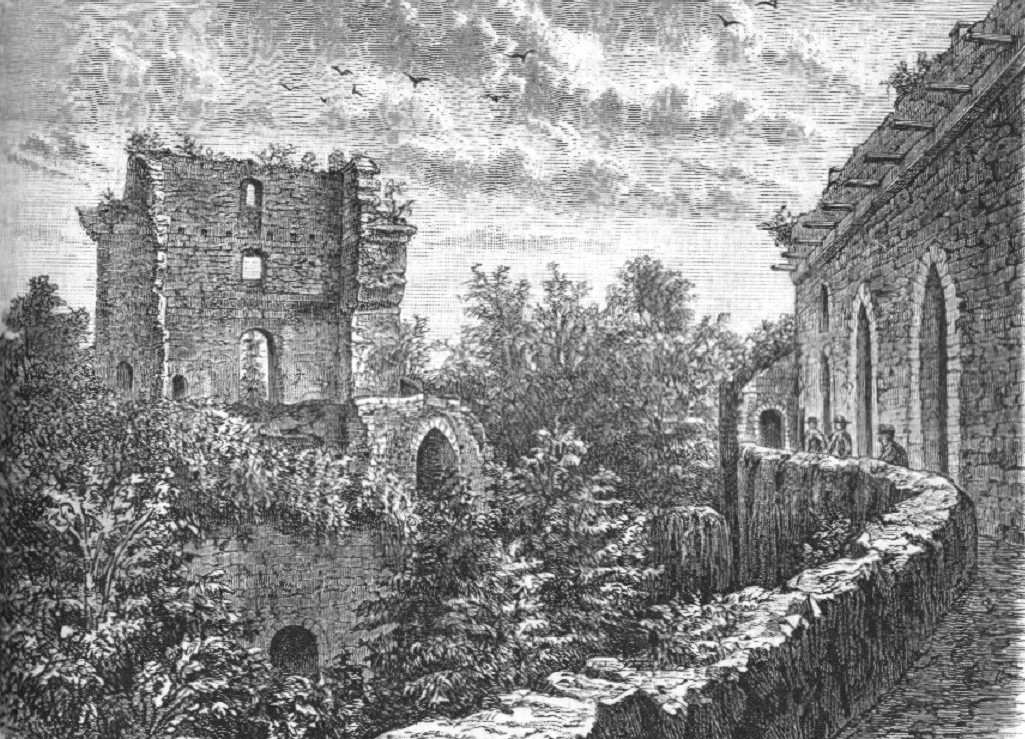
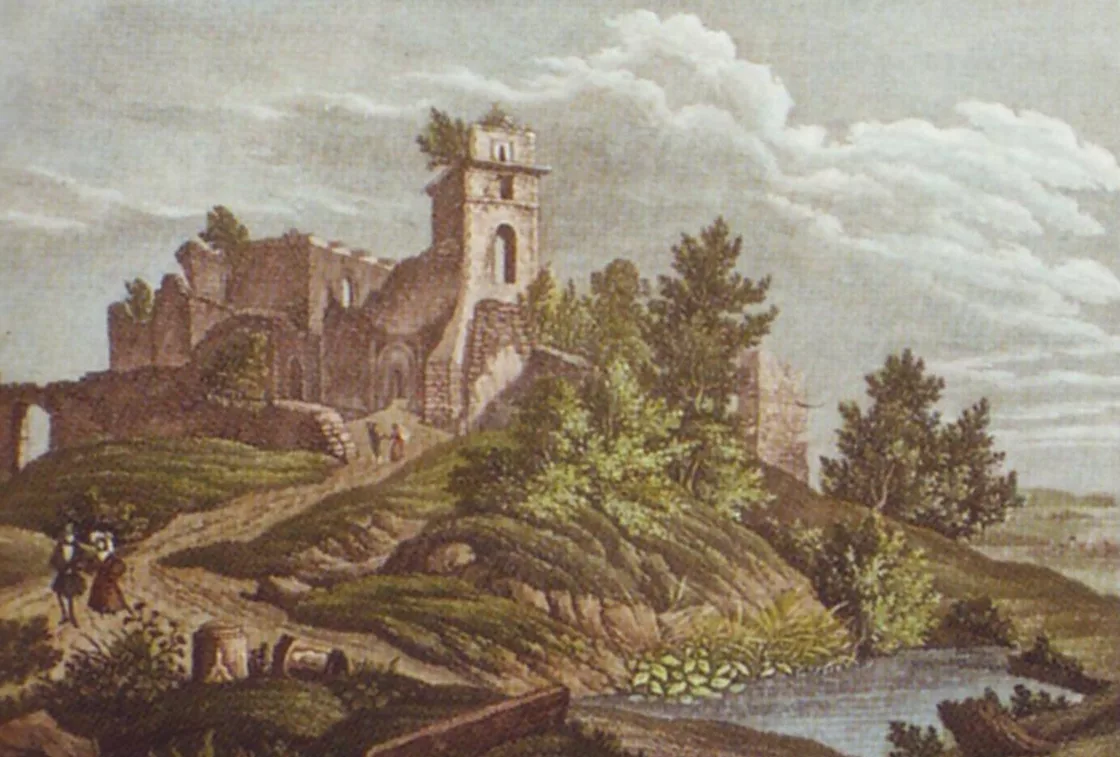
Around 1800 the estate passed to Count Hans Heinrich VI von Hochberg, lord of Książ Castle and one of the richest men in Silesia. This was the age of Romanticism, when educated Europeans fell in love with ruins, legends and wild landscapes. Hochberg had no intention of turning Grodziec back into a fortress. He wanted to preserve the ruin and make it a place people could visit.
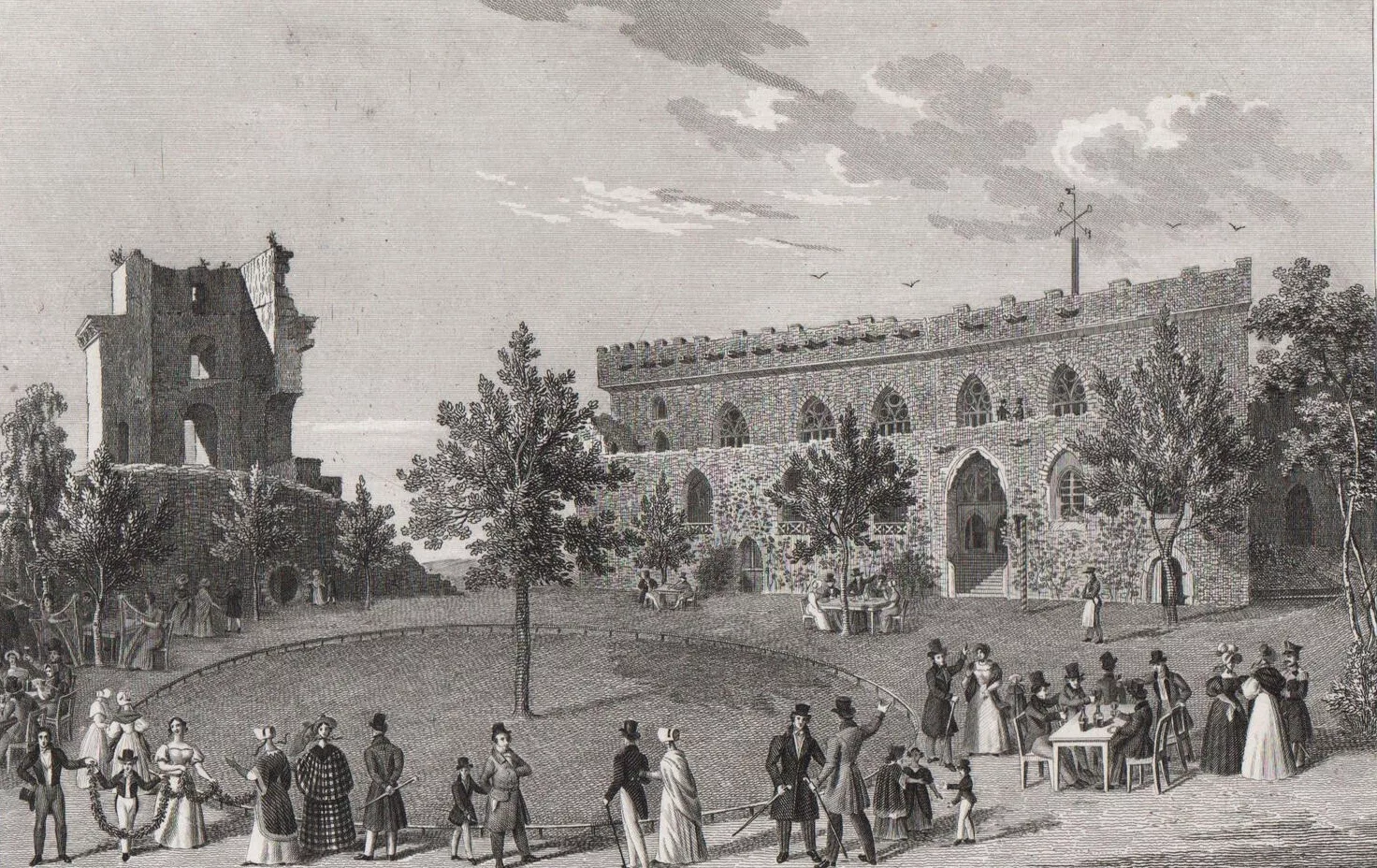
The Napoleonic Wars interrupted the work. In 1813, the year the armies fought across this landscape in the Battle of the Katzbach, the castle is said to have suffered another fire. Once peace returned the restoration went on. Rooms were secured, and historic stained glass panes from Switzerland were brought in. By the 1830s Grodziec had become one of the most popular excursion destinations in the region. It is often described as one of the first castles in Europe to be prepared deliberately for tourists. Visitors walked up the hill and admired the ruin and the view, and then went down to the inn in the village. In a way, Grodziec was a pioneer of the kind of trip you can make from the Lodge today.
The Emperor's Castle
At the end of the nineteenth century the estate was bought by Willibald von Dirksen, a wealthy Berlin diplomat and politician. He wanted more than a romantic ruin. He hired Bodo Ebhardt, the most famous castle architect in Germany at the time, who had also worked on the Haut-Koenigsbourg in Alsace for the emperor.
Between 1906 and 1908 Ebhardt rebuilt large parts of Grodziec. He followed the medieval plan, but he did not hesitate to add and to idealise. Historians still argue about how much of what we see is original and how much is Ebhardt's vision of a perfect Silesian castle. What is certain is that the result was spectacular. In 1908 Emperor Wilhelm II himself came to the grand reopening. After the restoration the castle housed a museum of Gothic and Silesian Renaissance art, a hotel and a restaurant.
Shadows of the Twentieth Century
The castle was later inherited by Willibald's son, Herbert von Dirksen. He became one of the best known German diplomats of his time and served as ambassador in Moscow, Tokyo and finally London on the eve of the Second World War. He was also close to the Nazi regime. Polish accounts say Hitler stayed at the Dirksen estate in Grodziec in 1933, and that an oak tree was planted in his honour.
The end came in 1945. As the war collapsed, the castle and much of its contents went up in flames. The art collections disappeared, the roofs burned, and what was left was stripped in the chaotic years that followed. For more than a decade Grodziec stood empty. In 1959 work began to secure the ruin, much of it done by volunteers. Today the castle belongs to the municipality of Zagrodno, and step by step it has come back to life.
Ghosts, Knights and Film Crews
A castle with this much history is bound to have ghosts. Local legend tells of two of them. The Red Ghost is said to wander the walls, and the Black Great-Grandmother appears in the old rooms. Whether you believe in them or not, the stories are part of the atmosphere, and the castle staff are happy to tell them.
The living are just as colourful. Grodziec is known for its knights' tournaments, wine and mead festivals and historical events, when the courtyard fills with armour, banners and the smell of open fires. Film crews love it too. Scenes from the Polish series "Wiedźmin" (The Witcher), "Korona królów" and "Przyłbice i kaptury" were shot within its walls.
What to See at Grodziec
The walk starts below the castle. A short climb takes you up the slope of the old volcano to the gatehouse, and you can already feel how hard it must have been to attack this place. Through the gate you enter the courtyard, surrounded by high walls and the residential buildings of the dukes.
Inside you can visit the Great Hall, the Knights' Hall, the duchess's rooms, the Prince's Room and the castle chapel. The highlight for most visitors is the climb to the towers and the walk along the walls. On a clear day the view reaches the Giant Mountains in the south, the lonely summit of Ślęża in the east and the rolling Kaczawa Foothills all around. This is where you understand why people have built on this hill for a thousand years.
Grodziec is also the northern start of the Piast Castles Trail, a long-distance hiking route that leads south through the Kaczawa hills to Bolków. If you have time, combine your visit with Ostrzyca, the "Silesian Fuji", or with the basalt columns of Wilcza Góra near Złotoryja. Both belong to the same volcanic story and make for a perfect half day of geology, history and views.
Your Trip to Grodziec Castle
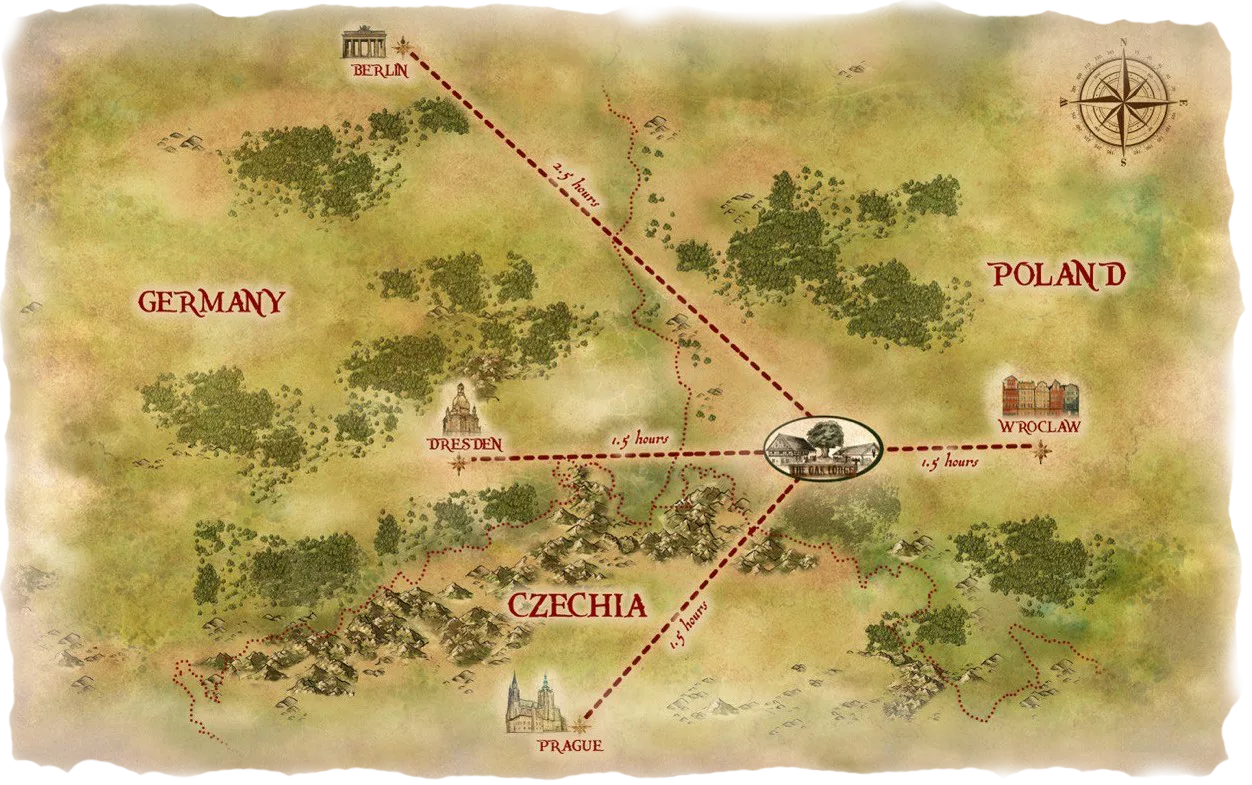
Grodziec is an easy short expedition from The Oak Lodge. The drive takes about forty minutes through quiet villages and open farmland. It is ideal for groups. There is room to spread out in the courtyard, the towers are fun to climb together, and the stories of dukes, mercenaries and ghosts give you plenty to talk about on the way back.
Plan around two to three hours for the castle itself, more if you want to hike or add Ostrzyca on the same day. Check the current opening hours before you go, because the castle can close to normal visitors during festivals and events. Then head back to the Lodge, light the sauna, and finish the day by the fire.
Distance:
20 km
Drive time:
30 min
Duration:
Half Day